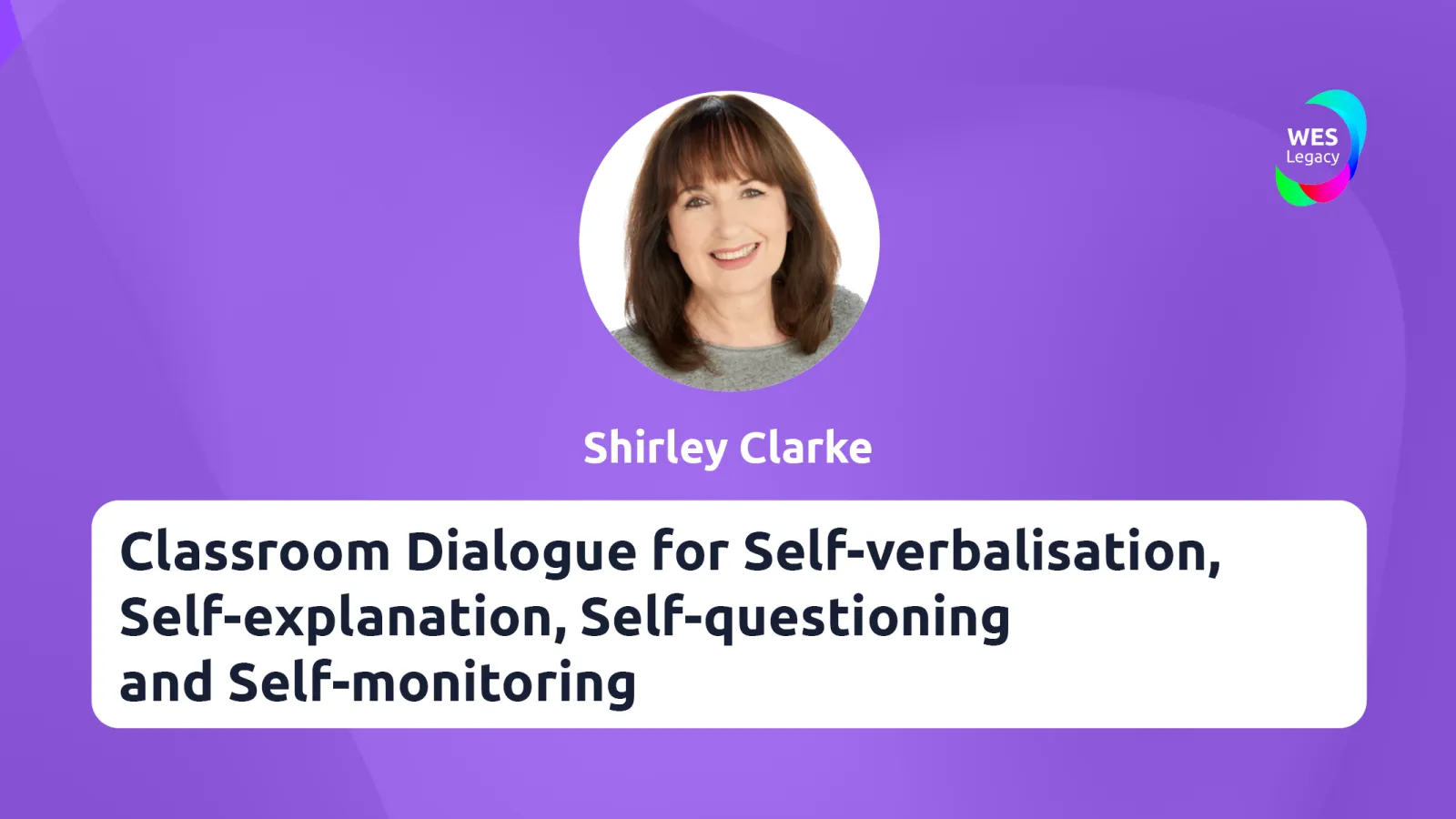
Classroom Dialogue for Self-verbalisation, Self-explanation, Self-questioning and Self-monitoring
Shirley Clarke
Up Next

Learning progresses through three stages: surface, deep, and transfer. Deep learning involves connecting concepts and understanding cause-effect relationships. Collaboration and high self-efficacy are crucial for effective learning strategies. Barriers such as fear of failure can impede self-efficacy. Organized group work enhances outcomes, while developing a language for seeking help promotes collaboration. Self-reflection empowers students to assess their learning, highlighting the importance of perspectives from both teachers and students.
No Resources found for this Session

Shirley Clarke
Dr Shirley Clarke is one of the UK’s leading formative assessment specialists, as well as a best-selling author. During a 20-year career as a teacher and then as a lecturer and researcher at the Institute of Education, Shirley directed a number of national research projects that focused on resolving nationwide assessment and curriculum issues. Her drive to improve formative assessment in order to empower learning in children has been instilled in the tens of thousands of teachers she has worked with.








Metacognition through Collaboration and Talk
Michael Walsh