
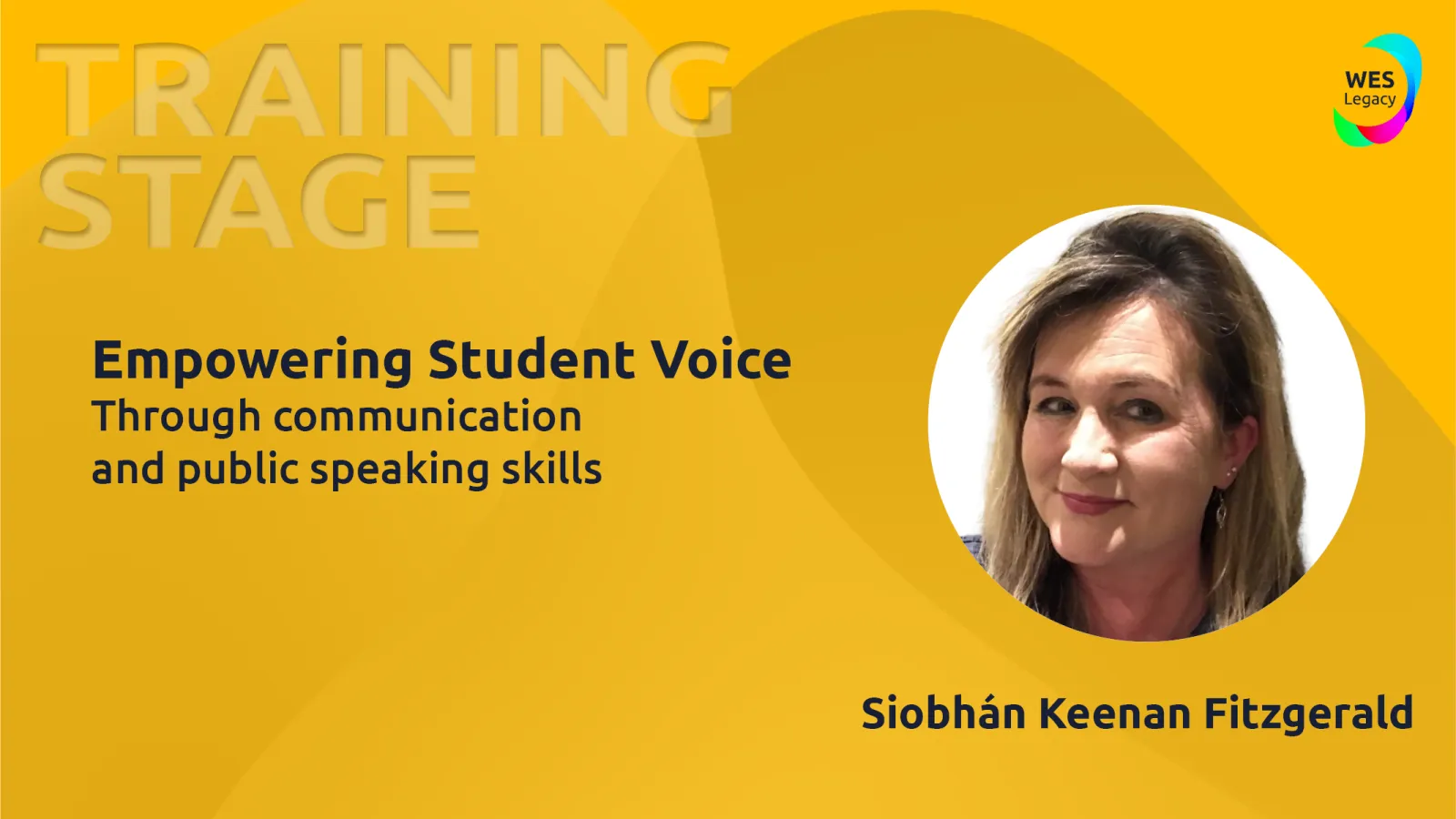
Empowering Student Voice
Siobhán Keenan Fitzgerald
Culture & Climate
Communications
Empowering & Enabling
Speech & Language
Student Agency
Training Stage
WES 2024
Up Next
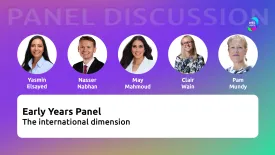
Early Years Panel
Clair Wain, May Mahmoud, Nasser Nabhan, Pam Mundy and Yasmin Elsayed
Student voice plays a key role in empowerment and representation in education. Educators should prioritize developing students' communication and public speaking skills to boost their participation and self-efficacy. Public speaking training helps students build confidence and express themselves. While the benefits include enhanced self-efficacy and communication skills, challenges remain in ensuring all students are heard, as highlighted by Article 12 of the UNCRC.In this session I will explain why it is important to empower all students with the skills of competent communication and public speaking. I will provide practical strategies regarding how teachers can begin this training with their students. I will discuss the benefits of a public speaking approach to oral language development including complimentary skills and dispositions that are developed as a result of this approach.
No Resources found for this Session
Siobhán Keenan Fitzgerald
Principal of Eglish Primary School, a ‘Dublin City University (DCU) Changemaker School’, in Galway, Ireland, Siobhán has been teaching since 1992. She has also taught in Japan, Switzerland, France and Saudi Arabia. 2-time TEDx Speaker, Siobhán has won many awards for public speaking. Passionate about helping all children develop their communication and public speaking skills, she is creator of the ‘LET’s Stand’ Public Speaking programme for young people. Siobhán’s Doctoral thesis is on ‘Public Speaking in Primary Schools'. Through enabling students to find and use their voice, Siobhán’s vision is to empower students from all backgrounds to share their stories.
Early Years Panel
Clair Wain, May Mahmoud, Nasser Nabhan, Pam Mundy and Yasmin Elsayed
Designing a Curriculum of Hope, Activity and Botheredness
Debra Kidd, Hywel Roberts and Ian Gilbert
The Power of Oracy in a Digital World
Allan McLean, Charlotte Law, Harry Bowman, Kathleen Cushnie and Rebecca Moore
Teaching Students to Drive their Learning
Douglas Fisher and Nancy Frey
The Future of Teaching, and the Myths that Hold it Back
Guy Claxton


Ellis-leigh Gray
A great way to gain some practical examples of how we can put some of UNCRC's into action. Encouraging children to use their voice, ensuring they have the skills to communicate publicly.