
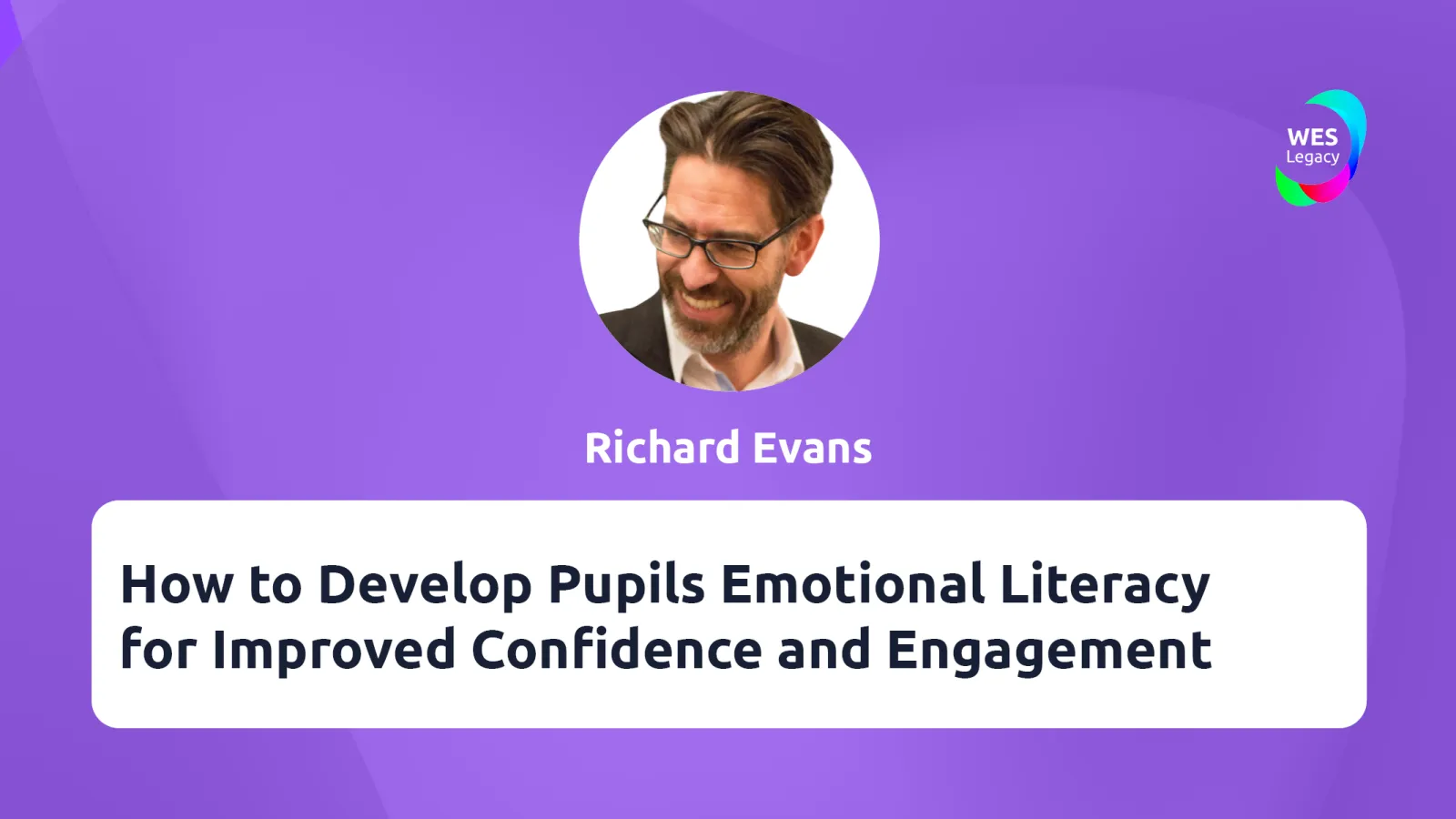
How to Develop Pupils Emotional Literacy for Improved Confidence and Engagement
Richard Evans
Up Next

Developing the Learning Environment
Caz Jude, Erin Herndobler and Jo Higgins
This session highlights the importance of emotional literacy in education. It defines emotional literacy as understanding oneself and others, which improves learning and behavior. Educators are encouraged to teach emotional literacy alongside academic skills. A passport tool is introduced to assess and enhance students' emotional skills, applicable in various settings. The session concludes with a call for educators to adapt their practices and collaborate to foster emotional literacy in schools.
No Resources found for this Session

Richard Evans
Richard Evans is a teacher and author with a passion for helping pupils who struggle at school. A former journalist, he has spent the last decade learning from pupils in lower sets, and in nurture and tuition groups. One of the fruits of their joint labour is ‘the passport’, a tool used across educational settings to assist teachers in helping pupils develop their emotional literacy. Richard has previously presented sessions to educators at the World Education Summit (2023 and 2021), at Outstanding Schools’ Europe (2022) and Middle East (2021) conferences, and at SecEd’s Pupil Mental Health Conference (2021).
Developing the Learning Environment
Caz Jude, Erin Herndobler and Jo Higgins

Engaging Students in Real World Problems through Citizen Science
Jennifer Towleh

Integrating Mindful Device Use into the Classroom
Rachael Stone


SCOPE: The School Conference of Parties Exposition
Asha Alexander and Vridhi Sharma
Transforming Instruction with Simple Structures
Spencer Kagan

Learning at the School that Learns
Begonya Folch and Mireia Xortó Prados


How to Use the SOLO Taxonomy to Help You Do Less, Better
Craig Parkinson

Teach Like a Champion vs An Enquiry Approach
Emma Oliver and Therese Andrews