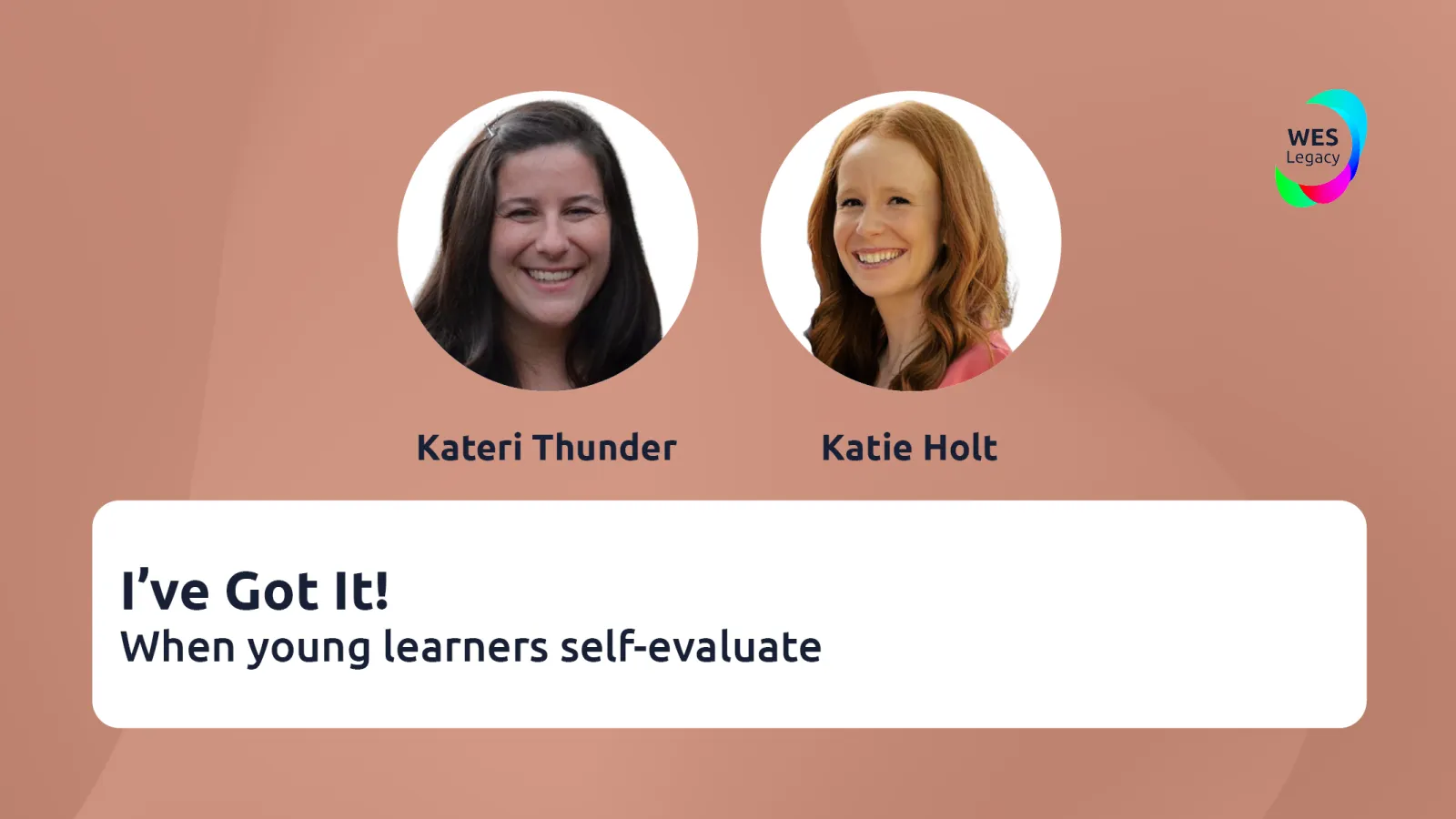
I've Got It!
Kateri Thunder and Katie Holt
Up Next

Self-evaluation is crucial for young learners, enabling them to take charge of their education. Experts discuss metacognitive strategies and self-monitoring techniques that engage students. The session highlights the development of early childhood learners, emotional learning through visuals, and the importance of setting learning goals. Peer teaching and consistent language around learning behaviors are emphasized, aiming to help children understand their learning processes from an early age.When young learners self-evaluate, they develop a habit of metacognitive thinking and advocacy that empowers them to own their learning journeys from the very start. Metacognitive strategies engage learners in deliberately practising self-monitoring, self-reflection, and self-evaluation. A variety of instructional strategies allow us to partner with learners and scaffold their self-evaluation both in the moment and at significant junctures of learning as well as across modes, including speaking, listening, drawing/writing, and reading.
No Resources found for this Session

Kateri Thunder
Kateri Thunder, Ph.D. has the pleasure of collaborating with learners and educators around the world to translate research into practice. Kateri researches, writes, and presents on equity and access in education and the intersection of literacy and mathematics for teaching and learning. She has partnered with thousands of educators to catalyze change in their classrooms and schools. Kateri is a best-selling author for Corwin’s Teaching Mathematics in the Visible Learning Classroom Series, Visible Learning in Early Childhood, and the Early Childhood Education, Success Criteria and Mathematics Playbooks. Kateri can be reached at www.mathplusliteracy.com.

Katie Holt
Katie Holt has taught 1st, 2nd, 3rd and 5th grade and served as a reading specialist with 6th-8th grade students. Her passion is making sure that students are fluent readers and critical thinkers. She has dedicated her career to developing metacognitive learners and making sure her students know their value inside and outside of the classroom. Katie leads professional development regarding best instructional practices, and her classroom is frequently observed by educators wanting to see these practices in action. Katie loves working with other educators to ensure that children worldwide are receiving the best education possible.

Developing Metacognition and Proactivity in 16-18 Year Olds
Martin Griffin and Steve Oakes



Stepping Stones for School Transformation
Peter Van de Moortel
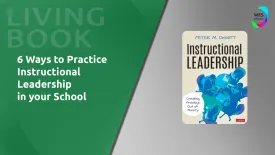
6 Ways to Practice Instructional Leadership in your School
Peter DeWitt