
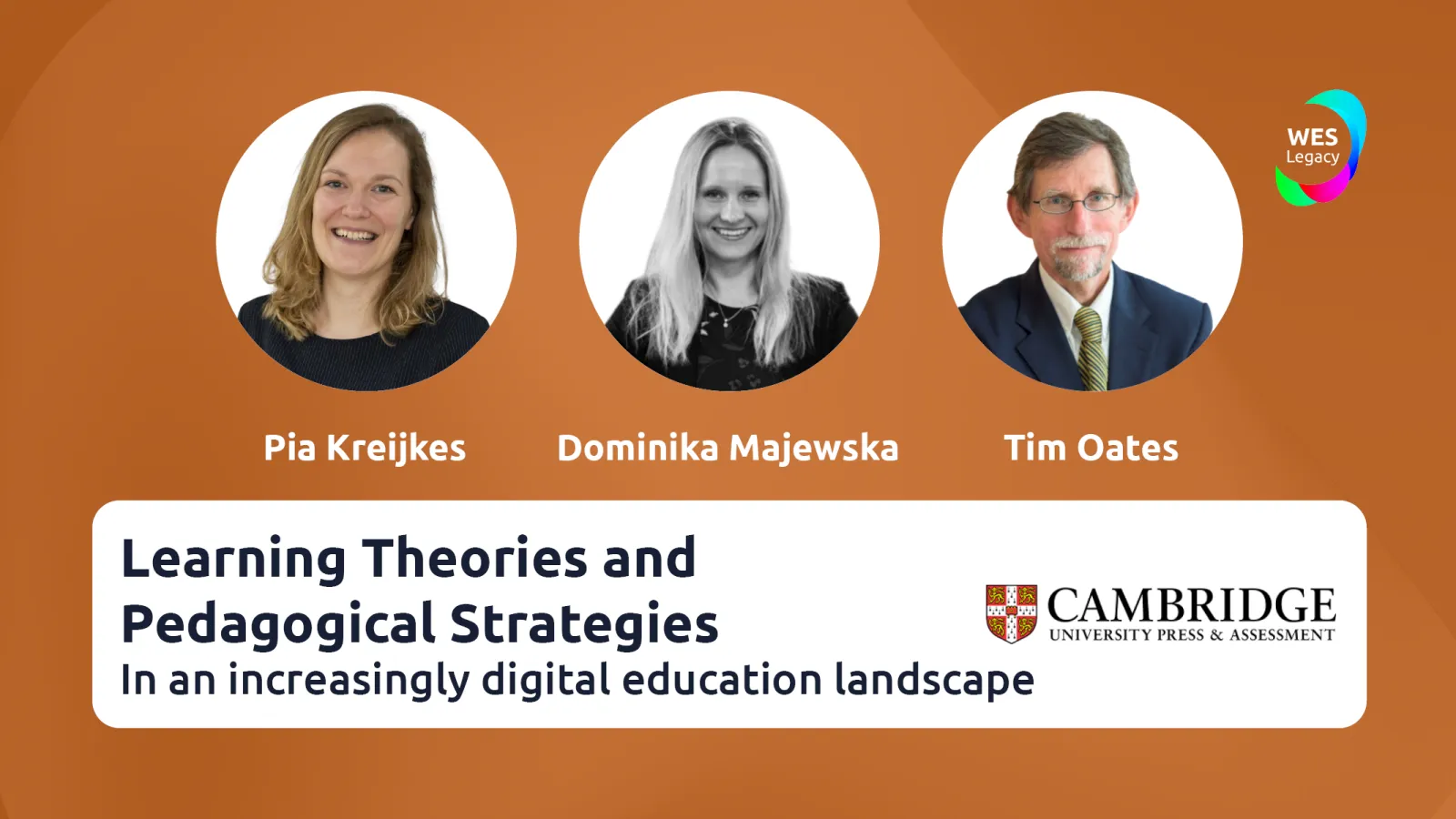
Learning Theories and Pedagogical Strategies
Dominika Majewska and Pia Kreijkes
Cambridge University Press & Assessment
At Cambridge University Press & Assessment, we're focused on meeting the needs of our learners, authors and customers by combining research, teaching, learning and assessment. Click here to find out more.
 Visit Cambridge University Press & Assessment
Up Next
The presentation covers essential topics in EdTech, focusing on the abundance of digital learning resources. It highlights the significance of learning models like behaviorism and cognitive load theory for evaluating educational applications. A literature review identifies over 20 learning theories but questions their practical impact. It advocates for a specific digital pedagogy and emphasizes the need for careful selection of digital tools to align with educational goals.Understanding implicit learning models in learning materials is an important area of research and concern for practitioners. Learning models should be made more explicit since they are fundamental to quality and positive impact. While we may not need learning models that are specific to ‘digital’, guidance is needed for how to apply existing models to digital resources.
No Resources found for this Session

Pia Kreijkes
Pia is a mixed-methods researcher in the Research Division at Cambridge University Press & Assessment. She holds a PhD in Education and Psychology from the University of Cambridge, UK. Her main research interests include non-cognitive factors that affect students’ educational achievement, such as motivation and beliefs about learning, as well as external factors that shape their learning experiences and outcomes, in particular pedagogical practices. Pia uses a variety of methods including surveys, experiments, document analysis, interviews, and classroom observations.
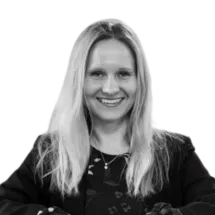
Dominika Majewska
Dominika is a Researcher in the Research Division at Cambridge University Press & Assessment in the UK. Her research interests span over a broad range of topics, such as comparative research, international education systems, and research that can support teachers and learners. Her recent work has explored cross-national comparisons, learning models in education and non-formal education. She is a Fellow of the International Society for Design and Development in Education and a supervisor on the Postgraduate Advanced Certificate in Educational Assessment course delivered by the Faculty of Education (Cambridge University) and Cambridge University Press & Assessment.
Removing Barriers for ALL Learners
Richard Tarves and Steven Graham


How Business Can Help Schools and Schools Help Business
Asude Altintas, Ger Graus, Lee Daly, Nick Richardson and Sebastian Coe


How Do We Cope and Navigate the New Landscape for Teaching and Learning?
Jennifer Chang Wathall, Oanh Crouch and Sandra Chow
Inquiry through Self-Organized Learning Approach
Amparo Serra Recatalá

The Future of Assessment
This special feature led by Tim Oates CBE of Cambridge University Press & Assessment delves into the future of assessment, unpacking the fashions, phobias and evidence in reforming education systems and the real impact of evidence from international surveys – exploring the robustness of PISA – its use and misuse at system level.


How to Supercharge Learning
Research, practical strategies and teacher practices to empower learning across schools. Taking the jump from a focus on teaching and teaching strategies to impact on learners and learning, is a jump to hyper-space. The rewards are greater, outcomes improve, learners are more engaged, and lives can be transformed. Here I have chosen a collection of sessions that take you from the overviews and research through to practical and inclusive implementation. Enjoy.
