Teaching Science with Technology
Evode Mukama
Up Next
A presentation highlights the Commonwealth of Learning's mission to improve education using technology. It discusses MOOCs, participant demographics, and the community of inquiry model, which emphasizes social, cognitive, and teaching presence. The networked learning framework promotes learner engagement, while Open Educational Resources (OER) are showcased for their accessibility. Chemistry simulations demonstrate interactive learning, and effective teaching strategies are shared. The session ends with a call for collaboration and the launch of a new MOOC.The purpose of this session is to share the Commonwealth of Learning's experience and lessons learned in supporting teachers to acquire new knowledge and skills for teaching science through Massive Open Online Courses (MOOCs) and technology-based Open Educational Resources (OERs). The challenge of providing quality science education, especially in developing regions, necessitates addressing the need for qualified science teachers. The session explores perspectives from teachers, facilitators, and teaching assistants, demonstrating how MOOCs and technology based OERs can increase the number of qualified science teachers, particularly women, shaping the future of science education.
No Resources found for this Session

Evode Mukama
Evode Mukama, an Adviser: Teacher Education at the Commonwealth of Learning in Burnaby, British Columbia, Canada, focuses on improving the quality of open distance learning and technology-enabled learning in teacher education. He works on enhancing students' learning outcomes through policy and course development and collaborates with governments and educational institutions to strengthen teacher capacity. Evode holds a PhD in Information and Communication Technology in Teacher Education from Linköping University, Sweden, a MEd in Curriculum Studies from the University of Natal, Durban, South Africa, and a BEd from the National University of Rwanda, Rwanda.
5 Ways to Use Microsoft 365 to Improve Digital Literacy
Jonathan Bishop and Matt Pitts
Adapting New Technologies to Empower English Language Teaching, Learning and Assessment
Joe Dale
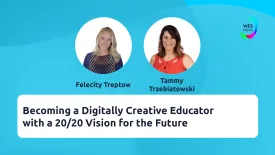
Becoming a Digitally Creative Educator with a 20/20 Vision for the Future
Felecity Treptow and Tammy Trzebiatowski
Inside Ideas
Erika L. Moser, Kammas Kersch, Keeko de la Pena, Kurt Klynen and Laurie Doran
Interactive Workbooks that get Students Active During Remote Learning
Suzanne Lustenhouwer