
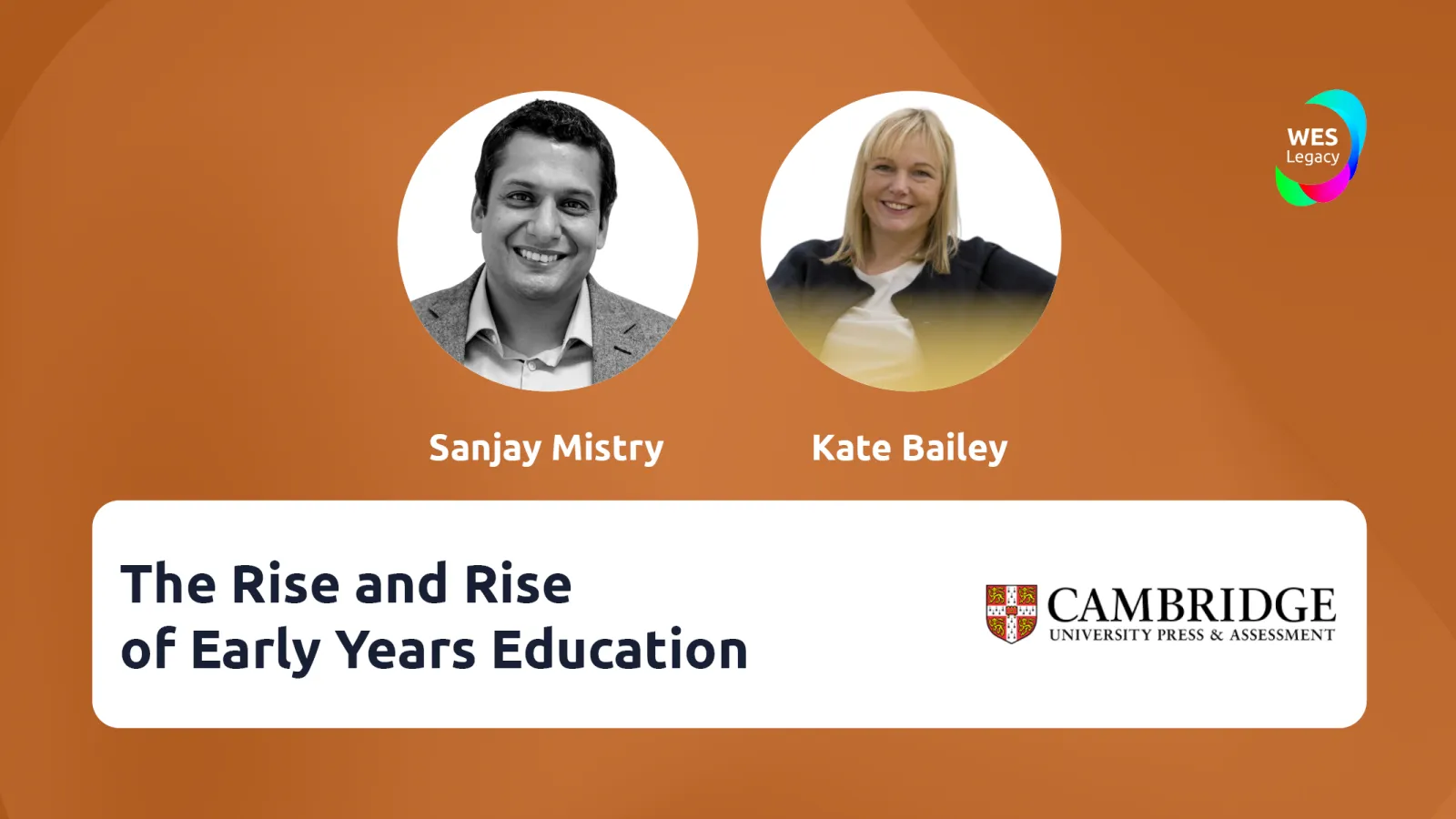
The Rise and Rise of Early Years Education
Kate Bailey and Sanjay Mistry
Cambridge University Press & Assessment
At Cambridge University Press & Assessment, we're focused on meeting the needs of our learners, authors and customers by combining research, teaching, learning and assessment. Click here to find out more.
 Visit Cambridge University Press & Assessment
Up Next

Can We Break the Chain of Chronic Absence and Fix the Attendance Crisis?
Robert Balfanz and Stephen Cox
Kate Bailey highlights the importance of formative assessment in early years education, showing how it can improve children's outcomes. She discusses the challenges teachers face with diverse backgrounds and the impact of preschool attendance on future success. The presentation emphasizes the need for effective assessment, teacher training, and parental engagement, while introducing Cambridge's early years program as a solution to enhance educational quality.Issues of quality in early years in different national settings What we should assess, how frequently, and how, and what should we do with the outcomes Balanced assessment and learning
No Resources found for this Session

Sanjay Mistry
Sanjay Mistry is Head of Research for Digital Assessment and Evaluation, International Education at Cambridge University Press & Assessment, a role which involves leading on the research strategy that is pivotal to the organisations strategic roadmap and development of various digital assessment products and services that serve the international market. He joined Cambridge in 2012 after a successful career in primary education leadership, as an Assessment Manager for Primary and Lower Secondary science and then moved position in 2015 to support the ambitious digital assessment plans of the organisation, developing the role he is in now.
Kate Bailey
Kate has worked at Cambridge Centre of Evaluation & Monitoring for 26 years. Her various roles in the business have brought her into almost constant contact with teachers and other educational professionals and Kate is passionate about driving products and services that help them transform the educational outcomes their learners. Previously, Kate focussed on working with International and UK business development teams to accelerate the uptake of our baseline assessment. Kate also has experience in assessment development, research and evaluation. She has served on several external advisory panels on assessment including government departments. Kate’s first degree is in psychology with a post-graduate degree in assessment development and an ongoing interest in how insight provided by educational assessment can help improve student outcomes.
Can We Break the Chain of Chronic Absence and Fix the Attendance Crisis?
Robert Balfanz and Stephen Cox
Understanding Evidence for Early Intervention
Nadia Siddiqui
Focus on Formative Assessment
Billy Burke, Sarah Philp and Shirley Clarke
Formative Assessment and Choice Theory Leading to Better Relationships and Knowledge
Mateja Peršolja
How to Build Student Agency and Inform Your Teaching through Formative Assessment
Marine Freibrun and Sandy Brunet
Responsive and Adaptive Teaching Strategies for Busy Teachers
Claire Gadsby
Teacher-Led Learning Circles on Formative Assessment
Carol Campbell

The Future of Assessment
Alison Peacock, Dylan Wiliam, Guy Claxton, John Hattie and Shirley Clarke
Unlocking High-Impact Formative Assessment and Metacognition
Cheryl Shirley, Emma Potter, Graham Macaulay, Phillip Hedger and Shareen Wilkinson
Unlocking Learning Intentions and Success Criteria
Shirley Clarke
What Does It (Really) Mean to Differentiate Instruction?
Carol Ann Tomlinson
Why We Need Better Assessment Procedures to Make Better Inferences about Teaching and Learning
Nikki Booth

The Future of Assessment
This special feature led by Tim Oates CBE of Cambridge University Press & Assessment delves into the future of assessment, unpacking the fashions, phobias and evidence in reforming education systems and the real impact of evidence from international surveys – exploring the robustness of PISA – its use and misuse at system level.
